
©Octavian Carare
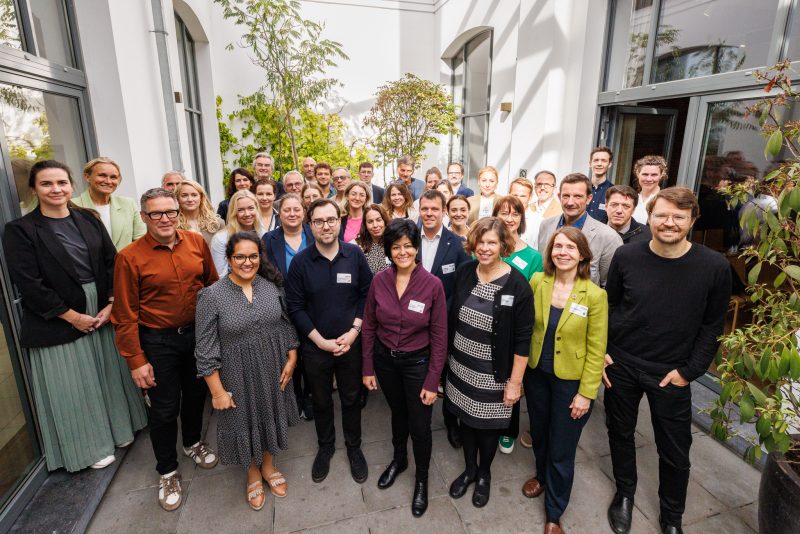
On September 21st and 22nd more than 50 built environment experts from policy, building design, project development, real estate investment and housing, spanning 7 European countries came together at befitting iconic Tour & Taxis site in Brussels for the first ever CPEA Summit, dedicated to the theme of “’Radical unlearning’ as a disruptor for market transformation”.
On the packed agenda of the interactive event were 5 core sectoral questions, such as:
- How to successfully create social value on projects?
A with a specific focus of the discussions on affordable housing, place-making, community inclusion and respect of human rights along the value chain. It was noted that while social value is absolutely essential to a holistic and systemic understanding of sustainability it often competes with other KPIs.
- How to adopt and implement a truly integrated approach with regard to ESG?
The main objective was to explore and highlight the risks of a one-dimensional focus on environmental issues, stressing the linkages and cross-impacts between environmental and social and governance ESG dimensions, e.g. between decarbonisation and housing affordability.
- How to ensure that projects safeguard and foster biodiversity rather than contribute to further biodiversity loss?
The overall tenor was that on biodiversity the industry is still in a very theoretical stage and that there is a lack of suitable tools, a need to define the metrics and agreement on what is actually being measured.
- How to get the construction and real estate sector ready for the circular economy and whole life cycle carbon?
Given the complexity of the sector and the issues at hand, training and upskilling were deemed as essential as well as building the business case to illustrate the added value of investing circular practices.
- How to embrace the concept of new simplicity in planning and design?
There were calls for providing proof of the actual performance of a building across the whole life cycle as building performance may sometimes require optimisation over many years to perform as planned but also for a change from measuring CO2 emissions in CO2/m2 to CO2/person to avoid placing the burden of the green transition on low-income members of society who live in low efficiency housing.
In his keynote speech and the ensuing Q&A session, Stefan Moser, Head of Unit, Energy Efficiency: Buildings and Products, within the European Commission gave an overview of what is currently on the menu in terms of the latest EU policy initiatives with relevance to real estate and construction.
The rich and inspiring discussions showed that, while the sector may be still at the beginning of the journey in relation to unlearning practices and mindsets regarding the topics on the summit agenda there was strong commitment amongst summit participants throughout the course of the two-day event to embrace disruption and to continue the dialogue.